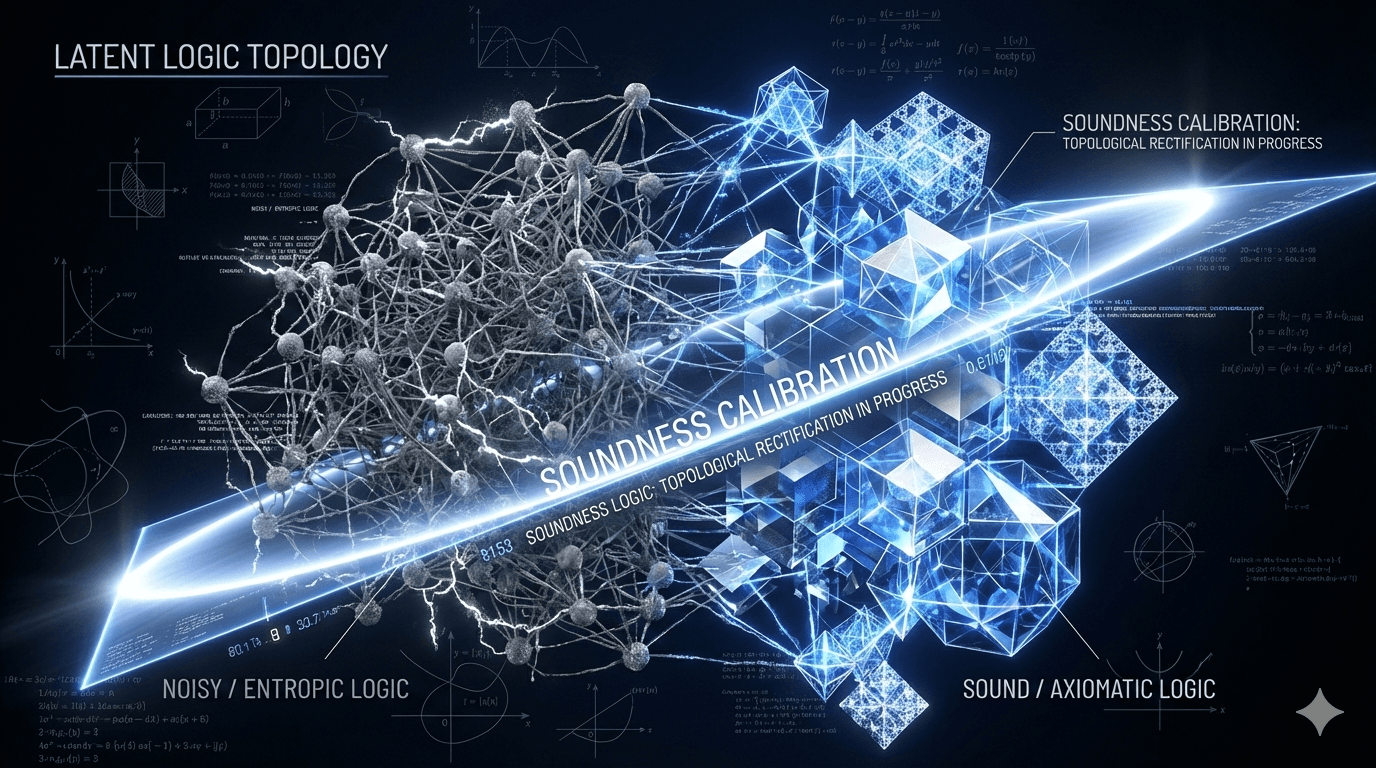
The RLVR Convergence Paradox
The current paradigm for building "Large Reasoning Models" relies on a compute-intensive phase: Reinforcement Learning with Verifiable Rewards (RLVR). While effective, this process is non-deterministic. Empirical auditing reveals an "RLVR Lottery": identical alignment pipelines applied to different base models yield vastly different results.
We posit that this divergence is not a failure of alignment, but a topological feature of the pre-trained latent space. High-potential models possess an Intrinsic Soundness Topology—a physical separation in high-dimensional space where valid logical deductions are disentangled from probabilistic hallucinations.
The Metanthropic Protocol
To quantify this potential, we operationalize the model not as a token predictor, but as a probabilistic engine of Latent Causal Chains.
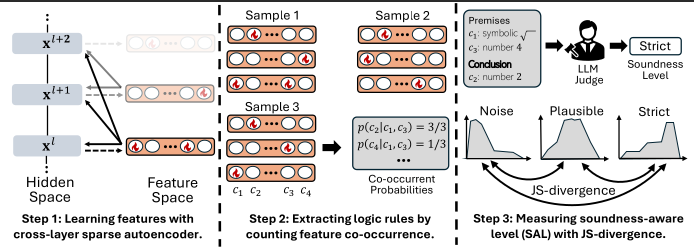
Figure 1: The Protocol Architecture. (1) Holographic Extraction via SAEs. (2) Causal Chaining via Horn Clauses. (3) Soundness Calibration via Oracle.
Phase 1: Holographic Feature Extraction
We utilize Cross-Layer Sparse Autoencoders (SAEs) to demultiplex the opaque residual stream into discrete, mono-semantic feature vectors. This gives us the atomic units of reasoning .
Phase 2: Latent Causal Chaining (Horn Clauses)
We formalize internal reasoning as chains of Horn Clauses . A latent rule implies that if a bundle of Premise features activates, a Conclusion feature follows with probability .
Logic Rule: Premise_1 AND Premise_2 Conclusion
For example, a stable reasoning circuit might encode:
occur("sqrt") AND occur("4") occur("2") (High Probability)
Phase 3: Soundness-Aware Calibration (SAL)
We categorize these discovered rules into semantic tiers using an automated Oracle:
- Strict: Axiomatic truths (Math, Code).
- Plausible: Heuristics.
- Noisy: Spurious correlations.
The Soundness-Aware Level (SAL) is computed as the Jensen-Shannon Divergence (JSD) between the probability distributions of these categories. A high SAL indicates that the model physically separates sound logic from noise.
Experimental Validation: The Topological Signal
We validated this metric across a matrix of models ranging from 0.5B to 14B parameters (Qwen, Mistral, Llama, DeepSeek).
1. Phase Separation
Strong reasoners (like Qwen-2.5-7B) display a Disentangled Topology. The probability mass for "Strict" axioms is concentrated at high confidence , acting as an intrinsic high-pass filter for logic. Weaker models show "Entropic Collapse," where signal and noise share overlapping distributions.
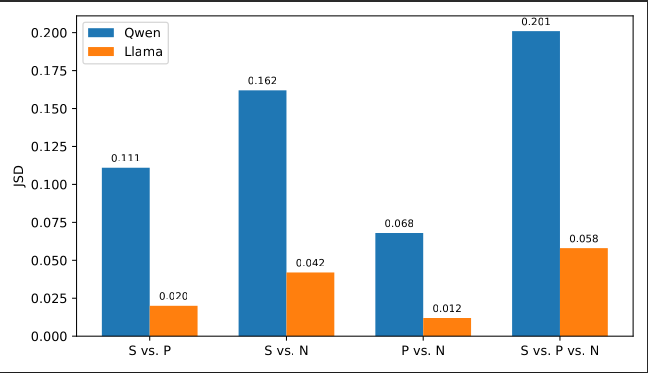
Figure 2: Topological Divergence. Top: High SAL (Phase Separation). Bottom: Low SAL (Entropic Collapse).
2. The SAL Scaling Law
We derived a formal empirical law linking the microscopic SAL metric to the macroscopic post-RLVR error rate :
With an R-squared of 0.87, this metric allows us to predict downstream reasoning performance with high precision before allocating expensive GPU hours to RLVR training.
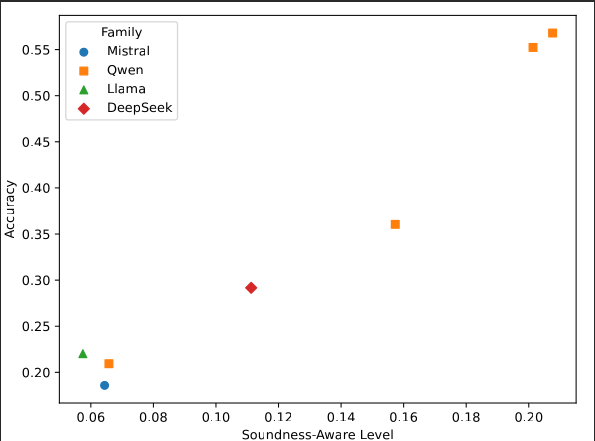
Figure 3: The Predictive Law. Post-deployment error decays exponentially as a function of pre-training Soundness (SAL).
Conclusion
The Intrinsic Soundness Topology proves that reasoning capability is not an emergent phantom but a quantifiable structure. SAL functions as a Computational Gatekeeper, allowing Metanthropic to strictly allocate compute to substrates that have demonstrated the intrinsic ability to disentangle signal from noise.